About Us
Little Flower Province of Bangalore
of the Congregation guided its destinies until the appointment of Sr. Mary Rose Thapa, the first MSMHC Mother General in 1970. The Congregation became a Papal Institute of Pontifical Right on 21 March 1977. It was officially recognized as the member of the Salesian Family on 8 July 1986. The Lord blessed the humble beginnings with rapid growth and rich missionary harvest. The first 6 pioneers were from Assam. With the passing of time vocations began to come from different parts of the country. Today, the Congregation has many local vocations and is blessed with 1410 members belonging to 75 ethnic groups from India, Myanmar, Nepal, Hawaii and Lesotho. The Congregation has now 6 Provinces in India, a Delegation in Italy and a Sub-delegation in Africa with 237 Centres. The members work in 65 dioceses, spread out to 14 countries, namely India, Myanmar, Sri Lanka, Italy, Swaziland, Lesotho, South Sudan, South Africa, Mozambique, Ethiopia, the Hawaiian Islands, Germany, Papua New Guinea, and Philippines. The Congregation is dedicated first and foremost to the missionary apostolate, evangelization and catechetical instruction, especially of women folk and children in the villages. Schools, boarding houses, oratories, dispensaries, mobile clinics, homes for the aged, orphans and children at risk, vocational training centres, schools for the differently abled rehabilitation of HIV/AIDS patients, working for the marginalized and the youth are various activities through which the MSMHC serve the Church. Imbued with the Salesian Spirit, the Congregation is pledged to practice Don Bosco’s method of Education, known as Preventive System in its own educational institutions and in those it runs for the parishes.
We, the Missionary Sisters of Mary Help of Christians are an international organization of women dedicated to the service of people, especially the less privileged and the marginalized of the society. True to our call as missionaries we aim at building the whole person enabling them to live with dignity and honour finding their rightful place in the society as well as in the life hereafter. The family being the nucleus of the society and woman taking the lead in making the home we focus on her holistic growth particularly paying attention to the formation of her mind and heart. Guided by the wisdom of our Founder we are engaged also in the care and formation of children. Our mission is realized through evangelization and catechesis, educational institutions, boarding houses, youth ministry, health centres, vocational training centres, centres for the differently abled and rendering adequate assistance to the young at risk. Having made substantial contribution towards the growth and development of the Church in North East India, and being aware of our universal commitment we continue spreading our wings to the rest of India and the world around. Our strong conviction to give the best we can for the world urges us to move on forward. Founded by Bishop Stephen Ferrando SDB, an Apostle of Christ from Italy to North East India of the twentieth century, we strive on to live the great missionary legacy passed on to us by our beloved Founder and Pioneers. This official website of our Congregation will give you some idea of our life and work. We are convinced of why we do what we do and the enormous good that can be done by our committed and collaborative efforts.
“TOGETHER TO THE FUTURE LET US MOVE ON TRANSFORMING ALL – TILL THE GOAL IS ACHIEVED”
History of the Province
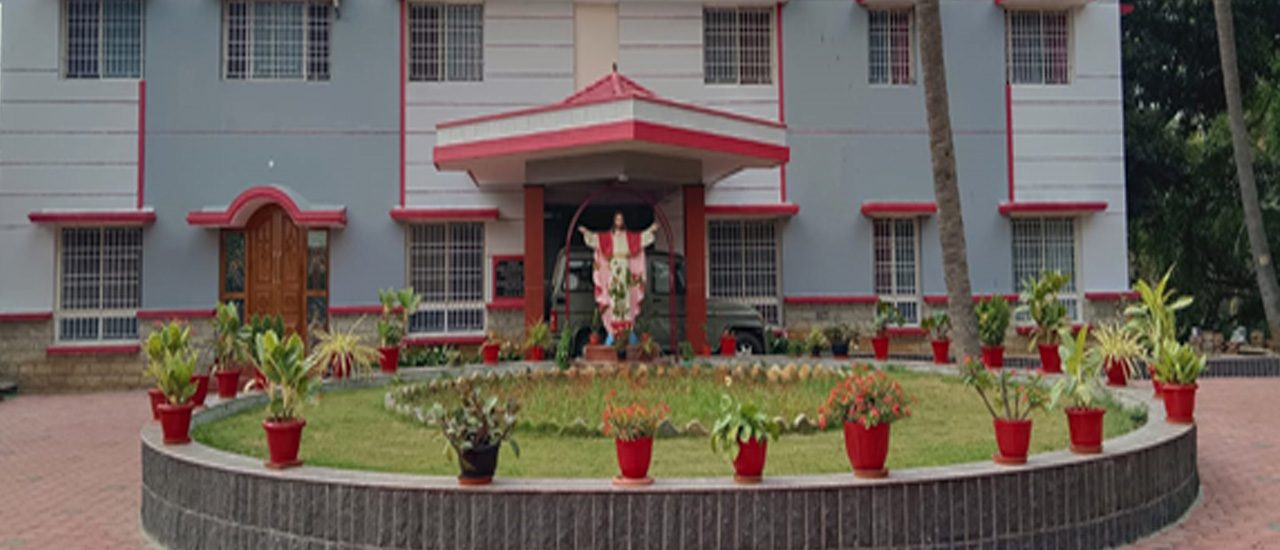
Owing to the administrative difficulties, St. Joseph’s Province Tezpur was divided into a Province and a Region. Thus, Little Flower Region of the MSMHC was carved out from the Province of Tezpur and canonically erected on 13th December 1996, with Sr. Ivy Joseph as its Regional Superior and Sr. Alma Joseph as the Asst. Regional. She along with her team members steered the Region from 1997 to 2002. The Region comprised of Communities in West Bengal, Bihar, Andhra Pradesh, and Kerala. At the creation of the region, there were 101 sisters in 19 communities. St. Joseph’s Convent, Emani, Guntur, Andhra Pradesh was kept as the temporary Regional House.
The inauguration of Little Flower Region was held on 24 February 1997 at St. Joseph’s Convent, Emani. Rt. Rev. Dr. Gali Bali, the Bishop of Guntur presided over the Eucharistic celebration. Mother Elizabeth Packumala installed Sr. Ivy Joseph as the first Regional Superior in the presence of Rt. Rev. Dr. Gali Bali, the Bishop of Guntur, Sr. Mary Sebastian, the General Councilor, Sr. Elsa Puthenpurackal, the provincial of Tezpur and Rev. Fr. Benjamin Puthetta, the Salesian Provincial of Hyderabad. A good number of sisters, fathers, friends and well wishers were present for the occasion.
The twin provinces Little Flower Province, Bangalore and Mary Immaculate Province, Calcutta came into existence on 9th December 2002 which were forked from Little flower Region. Sr. Bridget Jacob and Sr. Nancy Augustine were appointed as the maiden provincials of these newly erected provinces respectively. The Province comprising of four states (Andhra Pradesh, Karnataka, Tamilnadu and Kerala) of South India in 2002, with 15 communities and 69 sisters has been on the path of a marvelous growth ever since its inception.
Now there are 65 finally professed and 27 temporarily professed active and vibrant members, who reach out to the poor and needy through 16 communities spread over the states of Andhra Pradesh, Karnataka, Tamilnadu and Kerala. Being the channels of God’s unfathomable love, we have launched ourselves into the mission of the congregation through pastoral activities, social apostolate, schools, orphanages, home for the aged, boardings, etc.
On 11th February 2003, during the Eucharistic Celebration presided over by Rev. Fr. Mathew Maruvathinal SDB, the Salesian Provincial of Bangalore, Sr. Mary Thadavanal, the Superior General of the MSMHC installed Sr. Bridget Jacob as the first and incumbent Provincial of the newly erected province of Bangalore and entrusted her with the baton of animating the Province, at Pushpa Sadan, Kengeri, Bangalore, the cradle of the Province, the newly built Provincial House. Sr. Philomena Mathew, the Assistant General, Sr. Teresa George, the Bursar General, Sr. Ivy Joseph, the Regional Superior, a good number of priests, sisters, friends and well-wishers participated in the function. On the same day the provincial Councillors were also appointed to help the provincial in the administration of the province. Sr. Tessy Joseph, Sr. Alice Antony, Sr. Lisy George, Sr. Matilda Xaxa and Sr. Mercy Scaria were the members of the Provincial Council. With all the initial difficulties, the Provincial and her team with their dynamic leadership and undying zeal worked untiringly for the tremendous growth of the Province. During her tenure, on 24th May 2005, the Province began a new presence in Red Hills, Chennai in collaboration with the Salesians of Chennai Province. In the same year, on 5th June the province extended its service to Yadgir in North Karnataka along side with the Salesians of Bangalore Province. Due to financial constraints, the province was compelled to terminate its service at Pallivela, Andhra Pradesh, in 2005.
Soon after the General Chapter in January 2006, Sr. Bridget Jacob was re-appointed as the provincial of Little Flower Province. The members of the new provincial team are Sr. Tessy Joseph, Sr. Pushpa Surin, Sr. Alice George, Sr. Regi Chacko and Sr. Molly Mathew.
Sr. Alice Antony was re-appointed as the Provincial Bursar. The activities of the province were once again rejuvenated by the Provincial and her Council. On 4th November 2006, a new foundation was laid in KGF, Karnataka solely for the pastoral ministry. Two sisters were sent to Karunashreya, a center for terminal cancer patients, run by a trust in Bangalore. The province is now compelled to close down its’ another centre in Nallajerla, in May 2009.
Our Founder
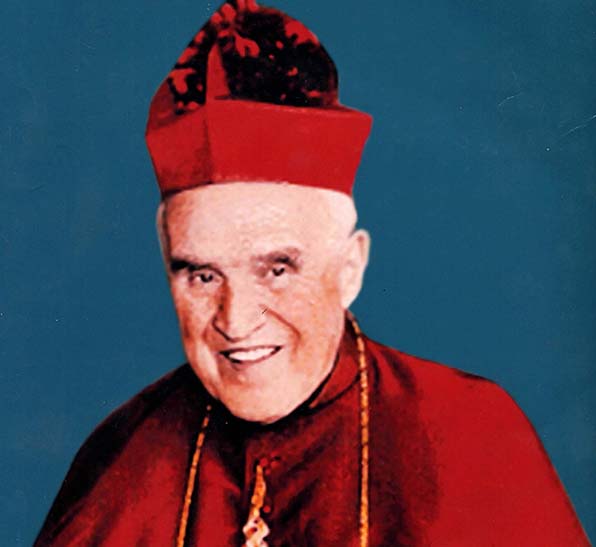
Ven. Bishop Stephen Ferrando
Stephen Ferrando was born as the second of the three children to Mrs. Josephine Salvi and Mr. Augustine Ferrando on 28th September 1895 at Rossiglione in the Province of Genova, Italy. He had an elder sister named Maria who was two years older than him and a younger brother John Baptist who was three years younger to him. Born and brought up in a pious and hardworking middle class family Stephen Ferrando acquired those traits in his life. He said “From my family I received a rich heritage; a great love for God and Madonna, spirit of sacrifice and a temperament inclined for joy”.
Being very simple and serene, though smart Stephen was a victim of the pranks of his companions who loved to make fun of him in his childhood days. He was able to laugh at his own follies and never took offence when he was laughed at. Often he sought to be alone and reflective. He appeared to be an ordinary boy that no one speculated on what he would become in the future.
He did his early schooling in his own village, Rossiglione. On 9 October 1904 he was admitted to Salesian boarding school at Fossano. He was enrolled to Don Bosco’s own Oratory, at Valdocco, Turin for the Middle School Education. He was admitted to the Salesian School at Valdocco on 24 October 1907 and remained there till 24 July 1909. He was a person of great discipline and etiquette. His teachers loved him for his calm and simple nature and for his obedience and cheerful disposition. He was much sought after by his companions for fun and humour.
While at Valdocco he had the opportunity of knowing personally some of the outstanding Salesians like, Fr. Paul Albera, Fr. Philip Rinaldi. Here he entered cheerfully and generously into the round of the various activities that bound him and his companions together. His close contact with the Salesians at Valdocco most of whom personally knew Don Bosco, possessed the warmth and love infused by Don Bosco and enthused by the challenging motto of Don Bosco “Give me souls and take away the rest” he expressed to his superiors his desire to become a Salesian priest. Later when he went home, he expressed his desire to his parents too who were very happy to support their beloved son to pursue his desire and encouraged him in his studies. Though they had to put up with financial constraints and make lot of sacrifices.
The inspiring episodes and narrations of the missionaries challenged the young minds of the boys in the boarding houses and Schools and also the formation houses of the Salesians. The missionary life of the Salesians awakened Stephen’s imaginative powers, and he desired intensely to be like them.
Thus, on completion of his high school studies, Stephen Ferrando was admitted to the novitiate at Foglizzo on 14 September 1911 and received the clerical habit on 19 October 1911 from Don Giulio Barberis the novice master. There “He distinguished himself among the confreres for maturity in judgment, for strong spirit of piety, for balance and equanimity of character, for prudence and exactitude in obedience, humble and docile submission and spirit of sacrifice.” Stephen Ferrando made his first profession on 15 September 1912, at the age of eighteen.
A Missionary
While doing his practical training at Borgo San Martino as a cleric, an unexpected letter reached Stephen Ferrando from his Major Superiors in Turin for they wanted to know what type of apostolate he would like to do as a priest. He promptly filled in the form writing a single word in capital letters “MISSIONARY”. He made his choice forever and gave his word. He simply wanted to be a missionary in any part of the world. He wanted to dedicate his whole life for the cause of Christ in the missions.
World War I:
In the words of Stephen Ferrando, “Second unexpected letter came a year later when Italy joined the World War I. The summons to take up arms in the battlefield in defense of my country came like a bolt from the blue for me and my companions”. For four years (1915 – 1918) he was kept in the frontlines of the battlefield. Entrusting himself and his future plans into the hands of God he approached the frontiers of war with an attitude of pride and loyalty towards his motherland – Italy. He kept this flame alive and prayed fervently everyday and looked forward eagerly to the end of the war.
In the battlefield, his superiors recognized his practical intelligence and ingenious spirit of bravery. He was honoured with awards and medals; with recognitions and promotions; from Sergeant to Lieutenant, from Commendatore to Cavalier and to Grand Official of the Italian Republic.
He received the following recognitions for the great services he rendered in defence of his homeland:
A Medal of Honour from the Lt. General of the King of Italy- 28-3-1917
Decorated with a silver Medal – 1919
Conferred title of Commandatore by Victor Emmanuel III- 14-2-1935
Made Cavalier & given title of Grande Ufficiale Republica Italiana – 03-03-1971
Same honour was conferred by the Prefect of Genova – 13 -10-1974
Diploma Accademico Onorario by the president, archeological Academy of Italy- 04-11-1974.
With deep faith in God and sincere effort to do “Always better; always more”, Stephen Ferrando achieved all these, though many times he had to risk his life and just trust that God will take care of him.
Soldier of Christ:
The war ignited further Stephen’s desire to be a missionary priest. Though it opened before him new avenues and vistas for a promising future, with all the laurels and titles attached to his name, yet the goal of life before Stephen was very clear. When in 1918 aged twenty five years, the war was over he returned to his seminary to continue his priestly formation, a mature and renowned ex-military man. The superiors gave him a year to discern his vocation, while he taught at the Institute Tecnico – Commerciale Liceo-Ginnassio in Constantinopoli, from 15 March to 15 December 1919.
Stephen knew what he wanted and so he came to the Salesian major seminary to do his theological studies in 1920. He made his perpetual profession on 26 December 1920. On 18 March 1923 Stephen Ferrando was ordained a priest by Cardinal Albino Pella, Cardinal of Alessandria. It was a day of great joy to his parents and family members.
He receives a third letter of surprise now from his Rector Major, Fr. Philip Rinaldi. It read “…You are to go to the Indian Missions – Assam. Lead the group of young novices to the mission of Assam. Be ready to report immediately…” Ferrando was overjoyed, yet suddenly felt unprepared for such a call. Tested and tried in the furnace of World War I as an ‘iron soldier”, after the initial shock he was prepared to give himself wholeheartedly to face the difficulties of the mission field.
Thus on 2 December 1923 Fr. Stephen Ferrando, along with Cleric Joseph Foglia and eight novices left for Venice to travel to the Assam Missions. They arrived in Bombay on 18 December 1923. But they had to continue travelling for few more days to reach their destination. At last on 22 December 1923, they reached Shillong, the land of their dreams. They were surprised to see practically the whole Catholic community waiting to welcome them there. Fr. Ferrando expressed his sentiments of their journey.
“At that time I was a new priest, twenty eight years old, after having served for four years in the army, during World War I as an Official of Health and decorated with a silver Medal; I was happy to have given up that office, to be the Soldier of Christ, as the leader of a missionary group. Now I was leading a spiritual army”.
Novice Master:
The first Salesian novitiate in India started on 20 January 1924 at Shillong. Fr. John De Ponti was appointed as the first Novice Master, Fr. Stephen Ferrando as the Socius and Bro. Joseph Foglia as the Assistant. Due to ill health, Fr. De Ponti had to leave for treatment to Calcutta and then to Italy only after 10 months of his stay as novice master. Thus Fr. Stephen was appointed the new novice master. As he accepted the new responsibility with a smile he said, “I have not yet learnt anything and yet I have to teach others already. The Lord continues to surprise me…” He served as the catechist of Our Lady’s House, the master of novices and the Rector of Our Lady’s House, and from 1929 as a council member of the Provincial Council of the Salesian Congregation in Northeast India.
Formation:
Fr. Ferrando was full of spirit and zeal for missionary work, and the novices emulated the same. His creativity found new ways and means to acquaint the novices with the challenges of the missions. He often took them to the villages, walking miles together. Such visits helped them to learn the customs of the people and how to adapt themselves to various circumstances. Such visits were also used for learning language in a very practical way. He also had an extraordinary way in which he could keep the Family spirit of the community alive. He thus served in the capacity of Novice Master for 10 years. While being the novice master Fr. Ferrando found enough time and opportunity to be with the people in the villages and regularly wrote about the Assam Missions to the superiors in Rome. He felt the greatness of God fully manifested in the multi- cultural and multi- lingual system in the Assam Missions. For him it was “a real Pentecost”.
Bishop of Krishnagar:
On 9 July 1934 Fr. Ferrando was appointed as the Bishop of Krishnagar,in West Bengal. The consecration took place on 10 November 1934. He was consecrated Bishop along with Mgr. Louis Mathias who was appointed Bishop of the new diocese – Shillong amidst a very solemn celebrations. Then on 21 November 1934 Mgr. Stephen Ferrando left for Krishnagar and reached there on 24 November accompanied by the Archbishop of Calcutta and the Bishops of Dinajpur and Shillong. A representation of the priests, catechists and the people welcomed them at the station of Ranaghat. His first solemn Mass was celebrated on Sunday 25 November.
Within three months of his arrival in Krishnagar Mgr. Ferrando toured the whole of his diocese and had formulated a clear plan of action. He was not spared of trials and sorrows during his short-term as the Bishop of Krishnagar. Acute scarcity of food due to flood on one side and draught on the other side; the unexpected death of Cleric Aloysius Cesarin were things beyond his control and least wanted. Though his stay was very short yet, he made it very impressive and laid a strong foundation for the Catholic Church as well as Salesian Congregation. The will of God destined him a happy return to the land which he had made his second home already. Thus on 26 November 1935, Pope Pius XI transferred Bishop Stephen Ferrando from the See of Krishnagar to that of Shillong.
Return to Shillong:
A long and tedious journey brought back Bishop Ferrando from Krishnagar to Guwahati as the new Bishop of the region on 23 January 1936. He had left Krishnagar on 14 January 1936 and went to Calcutta to prepare for his return to Assam. That evening of his arrival at Guwahati was a cultural programme with items by Garos, Boros, Uraons, Mundas and Santhals. His solemn entry into Shillong as its new Bishop took place on 14 March 1936. On his arrival he knelt down and kissed the earth of his new diocese as an expression of his sincere love, joy and dedication for the cause of Christ. Knowing his entry into the new diocese is going to be a long “way of the Cross” he renewed his priestly motto: ‘On the Cross is Salvation’, and offered it at the feet of Jesus Crucified and prayed to accept this offering of the immolation of his life for the salvation of Souls entrusted to his care. With such a spirit of total self-dedication, to the point of sacrificing his life, did Bishop Ferrando take charge of the Diocese of Shillong.
True to his motto, right from the beginning Archbishop Ferrando became the Apostle of Christ following in the footsteps of St. Paul.
When Bishop Ferrando took up the leadership of the vast diocese of Shillong, he had a vision for the whole region: “To lead the whole of North East India to Christ”. To achieve this goal he made use of all the means that could be harnessed. Two major problems harassed him in the new diocese: shortage of personnel and lack of funds. To add to these there were a number of trying situations which made the whole region and all the missionaries go through pressing times. The greatness of Bishop Ferrando lies in the fact that in the midst of difficult situations he was able to keep up the missionary enthusiasm of all who were with him, and managed to maintain the focus on the mission throughout his episcopate. He echoed the missionary call of St. Paul who said, “Woe to me if I do not preach the Good News.” Following his Master, Archbishop Ferrando was always on the move through his diocese to teach, to strengthen in the faith, to encourage and to lead to Christ thirsting souls. He put enthusiasm in the hearts of his priests, religious, catechists and every Christian for the cause of evangelization. As the Father of the Diocese, right from the start, he excelled in winning the hearts of all and gained their love, and reverence and obedience.
His missionary method was completely people oriented. He travelled for miles on foot across forests and paddy fields to reach the Christian communities, at times wading through rivers, walking through vast marshy lands, in inclement weather, fighting leeches and often coming across wild animals along the way. He would spend sleepless nights in the huts trying to ward off the mosquitoes. On reaching the village he would hear confessions, teach and instruct the people and visit the sick in their huts. People in their turn loved him as their Shepherd and manifested their love. True to his beautiful motto Apostle of Christ he did really made an apostolic pilgrimage across the lands of North East.
His presence brought added joy to the flock and enkindled enthusiasm and love in all. He moved around as the servant of all bent on bringing the Love, Peace and Joy of Christ to all his spiritual children. Every visit of the Pastor had a lasting good effect on the Parish and the villages around.
The World War II (1939 – 1945) was another test imposed on Bishop Ferrando. All the foreign missionaries who had been in India for less than 16 years were interned. The mission centres acutely felt the consequence of the internment of the missionaries. There were financial constraints which resulted in the lack of funds to meet mission expenses and so on. The people of North East being the frontier region were subjected to untold sufferings. The war also brought about Poverty and diseases. In all these trying situations Bishop Ferrando stood firmly on the Rock of Christ, led by his Madonna, Mary Help of Christians, convinced that everything will turn into good for those who love God and seek His will.
His zeal led him to found a Religious Congregation of women named the Missionary Sisters of Mary Help of Christians which took its initial steps on 24th October 1942. It was the scarcity of priests and sisters in the mission stations that convinced him to form indigenous missionary personnel. He conveyed his conviction in these words: “This terrible war has shown us once again the need for indigenous clergy and to this purpose all our attention should be directed.”
The construction of the Cathedral Church was started by the Archbishop, during the difficult days of World War II, with deep trust in God. He was able to consecrate the completed Cathedral on April 24, 1972.
He gave a great push to local vocations for the diocesan priesthood opening the St. Paul’s Seminary, Upper Shillong in the year 1962. It counts about 120 inmates now and to date about eight priests have already been ordained and are working in the Archdiocese at present.
On the 13 August 1969, Archibishop Ferrando tendered his resignation and left India for his native Italy on 7 October 1969. He never forgot his former field of labour and did visit it again in 1972, when the Salesians of Don Bosco were celebrating the Golden Jubilee of their arrival in Assam.
A close look at the outstanding characteristics of Bishop Ferrando reveals that God in His goodness had blessed him with a great missionary heart. The touch of incomparable warmth infused by him could be felt by those who came in contact with him. He possessed a strong and captivating personality and had the courage that made him a gallant soldier in the World War II. His greatest sacrifice was to return for good to his native Italy after the celebrations in Shillong. He continued his apostolate in his own country and died in Genova Quarto as the faithful shepherd on 20.6.1978. A stroke apoplexy at Genova (Italy) marked the end of his earthly life.
One of the long cherished dreams of the MSMHC was fulfilled on 3 December 1987 when the mortal remains of the Founder were transferred from Italy to Shillong. The wish of Bishop Ferrando himself, to be buried in India was also fulfilled on this day. A solemn requiem Mass was celebrated in the Cathedral of Shillong on 12 December. The mortal remains were then taken in procession to St. Margaret’s Convent Chapel (Shillong) and interred in a tomb artistically designed by Fr. L.B. Anthony SDB. On the visit of Fr. Tarcisius Resto, the then Vicar General of the Archdiocese of Shillong to Genova, Bishop Ferrando’s concluding message was: “I want my bones to be buried in Khasi-Jaintia hills.” The diocesan process for the canonization of the Servant of God, and founder of the MSMHC, Arcbishop Stephen Ferrando sdb, DD was initiated on 3 October 2003. The diocesan process was officially closed on 13 August 2006.
Our Patrons
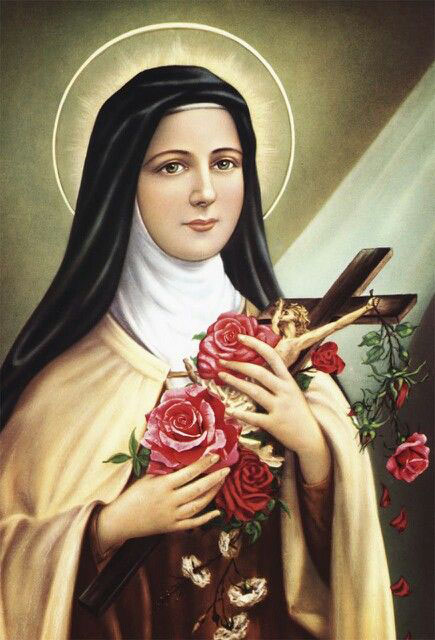
ST. THERESA OF CHILD JESUS
St. Thérèse of the Child Jesus – Patroness of the Little Flower Province
St. Thérèse of the Child Jesus, lovingly called the Little Flower, stands as one of the Church’s greatest witnesses of humble love, trustful surrender, and joyful simplicity. As the heavenly patroness of the Little Flower Province of the Missionary Sisters of Mary Help of Christians (MSMHC), Bangalore, she continues to guide, protect, and inspire the sisters in their consecrated mission. Her life, though brief, shines with a spiritual depth that has touched millions across the world, and for our Province, she remains a radiant model of walking the “little way” of holiness.
Early Life and Spiritual Lineage
Born as Marie Françoise Thérèse Martin on 2 January 1873 in Alençon, France, Thérèse grew up in a family deeply rooted in faith. Her parents, Saints Louis and Zélie Martin, were models of Christian virtue, filling their home with warmth, prayer, and charity. Thérèse, the youngest of nine children, experienced both tender love and profound suffering. After losing four siblings at an early age and then her mother when she was just four, she learned early to lean on God’s reassuring presence.
Her childhood was marked by a sensitive heart, affectionate bonds with her sisters, and a profound desire to belong totally to Jesus. Through trials—her mother’s death, illness, scrupulosity, and interior struggles—Thérèse discovered a spirituality patterned not on extraordinary deeds but on extraordinary trust. This spiritual lineage of love, sacrifice, and unwavering faith nurtured her path to holiness and shaped her identity as a child of God.
At just fifteen, she entered the Carmelite monastery at Lisieux, choosing a hidden life of prayer, offering, and sacrifice. There, she lived only nine short years, yet her spiritual legacy bloomed far beyond the cloister walls. Her autobiography, Story of a Soul, reveals the depths of her inner journey and continues to be a wellspring of inspiration for all who seek holiness in the ordinary moments of daily life.
Devotion and Patronage: A Heavenly Guide for the Province
St. Thérèse is hailed worldwide as the Patroness of Missions, not because she traveled across continents, but because of her burning desire to make Christ known and loved. Her missionary fire, expressed through prayer and sacrifice, mirrors the foundational spirit of the MSMHC congregation. For our Province, her presence as patroness is not symbolic—it is deeply personal and profoundly spiritual.
The Little flower Province draws strength from her assurance: ‘I’ will spend my heaven doing good on earth’. Her powerful intercession has been experienced by countless sisters who turn to her in moments of challenge, decision-making, or mission-related needs. Many testify that she showers not only roses—her symbol of answered prayers—but also courage, clarity, and peace. As we undertake educational, pastoral, missionary, and social ministries across the province, we find in her a quiet, steady companion who guides our service with tenderness.
Her “Little Way” shapes life in the Little Flower Province through:
1. Child like Trust in God: Thérèse teaches us that holiness lies not in extraordinary achievements but in surrendering ourselves completely to the Father’s love. This trust allows the Province to move forward with courage even amid uncertainties, relying on God’s grace in every apostolic endeavor.
2. Joyful Simplicity :Her life reminds us that joy is found in doing ordinary tasks with extraordinary love. Whether in schools, mission centers, boarding houses, or communities, the sisters find inspiration in her joyful spirit, seeking to radiate Christ’s love in every interaction.
3. Love as the Heart of Vocation: Thérèse discovered her mission in the heart of the Church: to be love itself. This vision shapes the Province’s identity—serving with compassion, seeing Christ in the marginalized, and embracing each ministry as an opportunity to manifest God’s love.
4. Sacrificial offering for Mission: Her passion for missionary work, though lived within the monastery, encourages every sister to unite her sacrifices with Christ for the evangelization of the world. The Province continues this missionary zeal—especially among the poor, youth, and rural communities—guided by her burning love for souls.
Her Protection and Intercession Over the Province
From its beginning, the Little Flower Province has placed itself under the maternal protection of St. Thérèse. Time and again, her intercession has been sought in community concerns, personal struggles, expansion of missions, and in forming young sisters in religious life. Her promise to let fall a “shower of roses” is felt in tangible ways—unexpected help, answered prayers, new opportunities for ministry, and the gentle assurance of God’s guiding hand.
Sisters often speak of her invisible yet deeply felt presence—a reminder that holiness is possible for everyone who walks the humble path of love. Her life continues to guide the Province in times of transition, growth, and renewal.
MIRACULOUS PRAYER – ST. THERESA OF CHILD JESUS
Glorious Saint Theresa, whom Almighty God has raised up to aid and inspired the human family, I implore your Miraculous intercession. you are so powerful in obtaining every need of body and spirit from the heart of God Holy mother church proclaim you a prodigy of miracles the greatest Saint of modern Times now I fervently beseech you to answer my petition and carry out your promises of spending heaven doing good up on earth and letting fall from heaven a shower of roses henceforth dear Little Flower give me your child like faith to see the face of God in the people and the experience of my life and to love god with full confidence. St. Theresa, my Carmelite sister, I will fulfill your plea and to be made known everywhere and I will continue to lead others to Jesus through you. Amen
Vision
Mission
Born to respond to the needs of mission ad gentes, the Congregation of Missionary Sisters of Mary Help of Christians is primarily dedicated to the missionary apostolate. The Sisters pledge themselves to proclaim the Good News of God’s love through their total commitment to missionary evangelization, which “demands self-giving without limits of energy or time.” The Sisters share their experience of Christ whole-heartedly with others and build up human and Christian communities by the witnessing power of their lives, the active proclamation of the Word of God, catechetical instruction and their availability for service in answer to the signs of the times and the needs of people. Their mission inspires them to make present to the whole world the Mystery of Christ’s love. To Build a Harmonious society/family of God/Kingdom of God. The congregation’s motto is: Go Proclaim the Good News to all Nations. We are called to proclaim to all that God loves them in their own situations and if they are open to receive God’s love everything will change for them and life will become delightful, meaningful and peaceful in all situations. By proclaiming God’s love we seek to build God’s kingdom in the hearts of people. When God’s kingdom comes into the lives of people they will begin to live by the values of God and there will be fruitfulness in their lives. In our efforts to build God’s kingdom in people we try to bring harmony in them by helping them get rid of all the negatives, hurts etc and experience God’s presence and action in their lives. We do it also by sharing our own experiences of God’s love and power in our lives and showing them how things have changed for us because of our awareness of God’s presence in our lives and our trust in him. We can build a harmonious society only if we build harmony in individuals. Many harmonious individuals make a harmonious society. In the first place we have to bring harmony into our own lives. A person who is not in harmony with her cannot help others to have harmony in themselves. We are wounded healers. While we take care of our wounds we help others. To be able to bring harmony into our own lives and help others to have it in theirs we need the power of God. For this we need to be rooted in God. The Missionary Sisters work for the integral development of people and the transformation of society. They have a preferential option for women and children in rural areas, in order to lead them to the experience of Christ. The religious consecration of the Missionary Sisters is for mission, the mission of Christ, who came to proclaim the Good News to the poor, so that all may have life in its fullness. They embody the Church’s vision and give themselves completely to the radical demands of the Gospel and become totally available to God, to the Church and to the entire human family. The Sisters work in 50 dioceses of India, Italy, Africa, Sudan and Hawaii. The Congregation has 981 Professed Sisters belonging to about 50 ethnic groups of India. Besides proclaiming the Gospel through schools, boarding, dispensaries, oratories and home for the aged, the Sisters are engaged in various activities such vocational training centers, schools for the differently abled children, street children and rehabilitation centers for HIV/AIDS patients, etc.
Our Logo

“Go Proclaim the Good News.” (Mt 28:19)
The BIBLE symbolizes the Word of God, the assiduous meditation of which will nourish the mind of the Missionary Sister, strengthen her will, and form her heart to preach this WORD to the world.
The ‘M’ with CROWN AND SCEPTRE represents Mary Help of Christians, the Principal Patroness of the Congregation. She is the special Protectress and the inspiration of the Missionary Sisters, their model and guide in their religious life and in their apostolate.
The CROSS stands for Christ, who is the center of our lives, from whom we draw light and strength to carry out our apostolate. It also reminds the Missionary Sister of the crosses she must be ready to embrace in her apostolate as proofs of her love for Christ and efficacious means of saving souls.
The WORLD symbolizes the field of the Missionary Sister’s apostolate, where she proclaims the Good News of Christ in order to draw all people to Him. The STAR represents Our Lady, ‘the Star of Evangelization’, to whose care the religious life and missionary activities of the Missionary Sister are entrusted.
Please feel free to contact or talk to us for any assistance or support related to our programmes, seminars, services that we provide.